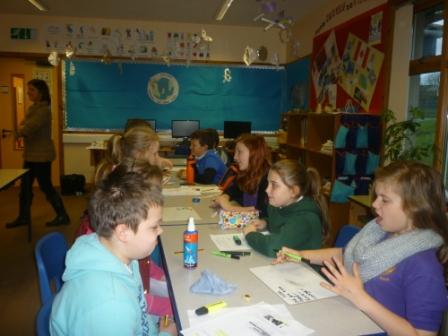
Last week we were experimenting with ice and salt to see if there is any difference between fresh and salty water.
In our first experiment we discovered that salty water took longer to freeze than freshwater and even after 48 hours in the freezer it still felt a bit slushy compared to the solid block of fresh water.
For the second experiment we needed water and ice cubes with various amounts of salt. We tested the buoyancy of the different 'ice bergs' in different salt solutions and discovered that the saltier the water the higher the cube floated. Some of our science boffins explained that it is because salt water is denser than fresh water. (Thank you James and Ronan)
After research we discovered that icebergs are made of fresh water as they come from broken glaciers on land. (Thank you Kaitlyn.)
In our third experiment we looked at the effect salt has on ice. We added salt to blocks of ice made from fresh water and saw how it started to pit and melt the ice. After adding drops of food colouring we watched the patterns made in the ice as the salt made cracks and fissures and the colour trickled through. Some of the patterns reminded us of glass paperweights and it was fascinating to watch the changes.
You can see some of the patterns in the slideshow below.
During the winter, the top layer of the ocean near the North Pole freezes solid. Every summer some of this ice melts. But not all of it melts. Some of the ice is so thick it stays frozen all the time, even throughout the summer. However, since 1979, when Earth-observing satellites began watching, the ice remaining at the end of summer has been getting smaller and smaller. At the end of summer 2009, the ice was only two-thirds as large as at the end of the summer of 1979. In August 2012, is was the smallest on record.
To find out more try some of the Arctic links on our science tab on the right.